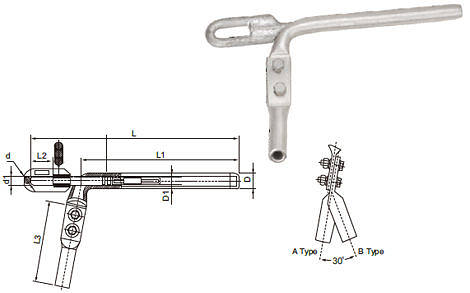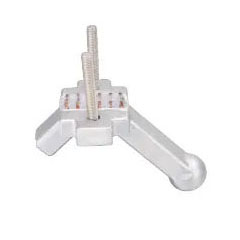

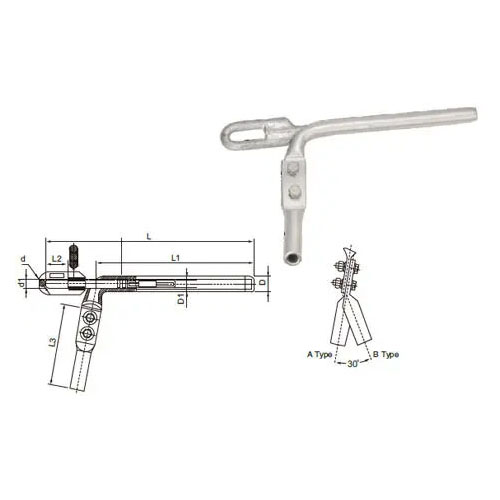
| Compression dead end clamps are used in all areas of overhead line construction, which is both for substations and for transmission lines. The greatest possible strength is achieved with compression dead end clamps; for example: with ACSR conductors the load-bearing steel cable is held separately, so that even conductors having an extremely high steel proportion can be clamped for high-tensile stresses. There are different compression systems in use: circumferential compression and indentation for hexagonal compression, the latter being the most popular. Compression can be achieved with a variety of tooling systems provided the compressive force of the press is sufficient and the characteristics of the inserts and clamps match. Compression dead end clamps are tapered at the conductor inlets to allow gradual force transmission. Normally the jumper terminal is bolted to the clamp flag; for smaller types, designs comprising a welded jumper can be supplied. Compression fittings are available for every conductor type and size. To achieve the best results the clamps are individually adapted for each conductor and therefore we need the following information, preferably on a data sheet, for the conductor: – Code name or identification of the conductor – Material and cross sections – Number and diameter of wires – Ultimate breaking load Compression fittings are filled with compound and sealed. | |
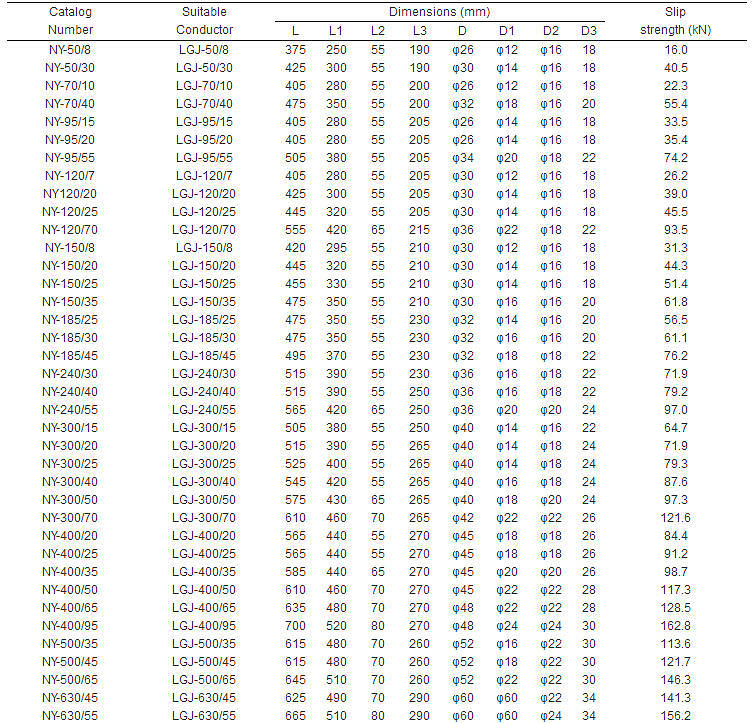
| Full Tension deadend assembly for ACSR conductors consists of a aluminum deadend body precompressed onto a steel unit, a jumper terminal, mounting hardware and core gripping unit. Material: Body: Seamless extruded Aluminum Alloy tube Eye: Galvanized forged steel Terminal: Seamless extruded Aluminum Alloy tube Hardware: steel,hot galvanized |
|
Send us a message if you have any questions or request a quote.Our experts will give you a reply within 24 hours
and help youselect the right valve you want.